BESTSELLER




WORLD OF PERFUMERS — WORLD ENVIRONMENT DAY
100%
Glass Bottles
0%
Animal Testing
58+
Fragrances · Made in India
♻️
Recycled Kraft Packaging
🌱
Alcohol-Free Attars
📋 In This Article
→ What Is World Environment Day?
→ History & Origin of World Environment Day
→ World Environment Day 2026 Theme
→ Why Perfumery & Nature Are Inseparable
→ The Environmental Cost of Fast Fragrance
→ How World of Perfumers Chooses the Earth
→ Eco-Friendly Packaging — Glass & Kraft
→ Alcohol-Free Roll-On Attars
→ Natural Oud & Attar Collection
→ How You Can Make Greener Fragrance Choices
→ World Environment Day 2026 — FAQ
→ A Message from Nikhil Singhal
What Is World Environment Day?
World Environment Day is the United Nations' principal vehicle for encouraging awareness and action for the protection of the environment. Observed every year on 5th June, it is the largest global platform for environmental public outreach — celebrated by millions of people across more than 143 countries worldwide.
It is not merely a symbolic day of reflection. World Environment Day drives real, measurable action — policy commitments, grassroots clean-up campaigns, corporate pledges, and individual habit changes that, in aggregate, shift the way humanity relates to the planet it inhabits. Since 1974, it has served as the single most powerful annual reminder that the Earth is not a backdrop to human life — it is the foundation of it.
For us at World of Perfumers, World Environment Day is deeply personal. Fragrance — our entire craft, our livelihood, our passion — is born from the Earth. Every note of rose, every drop of oud, every thread of sandalwood, every breath of vetiver exists because the natural world exists. To care about fragrance is, inescapably, to care about the environment.
History & Origin of World Environment Day
World Environment Day was established by the United Nations General Assembly in 1972, during the Stockholm Conference — the UN Conference on the Human Environment, which marked the first major international gathering focused entirely on the state of the global environment. The conference, held from June 5–16, 1972, set June 5 permanently as World Environment Day.
The first celebration was held in 1974, under the theme "Only One Earth" — a phrase that remains as urgent today as it was over five decades ago. The United Nations Environment Programme (UNEP) has coordinated the day ever since, designating a different host country and a new theme each year to focus global attention on a specific, pressing environmental issue.
🌍 World Environment Day — Key Milestones
1972 — UN Stockholm Conference establishes June 5
1974 — First official celebration: "Only One Earth"
1987 — Rotation of host countries introduced
1992 — Rio Earth Summit expands global momentum
2016 — Paris Agreement ratified; climate urgency peaks
2026 — 54th World Environment Day · 5th June
Over the decades, World Environment Day has addressed themes ranging from desertification and ocean degradation to plastic pollution, biodiversity loss, and ecosystem restoration. Each year, the host country and theme shift global attention to what is most urgent — and galvanise individuals, governments, and businesses to act in concert.
World Environment Day 2026 — Theme & Global Focus
Each year, UNEP announces the official theme for World Environment Day to anchor global conversations and campaigns around a specific environmental challenge. The themes have ranged from "Beat Plastic Pollution" (2023) to "Land Restoration, Desertification and Drought Resilience" (2024) to "Land Restoration" (2025). The 2026 edition continues the urgent call for systemic, consumer-led, and policy-backed environmental action.
World Environment Day 2026
"There is no Planet B.
There is only this one Earth — and every action counts."
There is only this one Earth — and every action counts."
Whether you are a global corporation, a small business, or an individual making daily choices — the planet's future is shaped by what each of us decides to do next. World Environment Day 2026 is a call to act boldly, think clearly, and choose sustainably.
In India — one of the world's most biodiverse and ecologically rich nations — World Environment Day carries particular weight. India is home to over 8% of the world's recorded species, four biodiversity hotspots, and some of the planet's most extraordinary natural fragrance resources: Kannauj's rose fields, the sandalwood forests of Karnataka, the vetiver roots of Rajasthan, the agarwood groves of Assam. These are not just India's treasures — they are the raw material of the world's most beloved fragrances, and they are under threat from climate change, deforestation, and unsustainable harvesting.
Why Perfumery and Nature Are Inseparable
Fragrance is the most ancient form of humanity's relationship with the natural world. Long before cosmetics, long before medicine as we know it, long before chemistry — human beings burned resins, crushed flowers, and extracted oils from bark and roots to create scent. The word perfume itself comes from the Latin per fumum — "through smoke" — a reference to the ancient practice of burning fragrant woods and resins as offerings to the divine.
Every fragrance family — florals, orientals, woods, aquatics, chypres, fougères — is grounded in materials that come from the Earth. The industry's greatest treasures are entirely natural in origin:
🌹
Rose — Kannauj, India & Grasse, France
It takes approximately 4 million hand-picked rose petals to produce just 1kg of rose absolute. India's Kannauj region has supplied rose attar to the world's greatest perfumers for over 400 years. Climate change is now directly threatening rose yields across both Kannauj and Grasse.
🪵
Oud (Agarwood) — Assam, India & Southeast Asia
Oud is formed when the Aquilaria tree becomes infected with a specific mould — producing a dense, dark, extraordinarily fragrant resin. Wild oud trees are critically endangered; unsustainable harvesting has decimated populations across Assam, Vietnam, and Cambodia. Sustainable cultivation is now critical to the fragrance world's most prized material.
🌿
Sandalwood — Karnataka & Mysore, India
Mysore sandalwood — Santalum album — is considered the world's finest. A slow-growing tree requiring 30+ years to mature, it has been so over-harvested that wild Indian sandalwood is now strictly regulated. Australia has stepped in as a key supplier, while Indian sandalwood remains a protected, government-controlled resource.
🌱
Vetiver — Rajasthan & Haiti
Vetiver grass roots yield one of the most complex, earthy, and revered base notes in perfumery. Known as khus in India, vetiver is also one of nature's finest soil stabilisers — preventing erosion, restoring degraded land, and recharging groundwater. Growing vetiver is, quite literally, a fragrant act of environmental healing.
🫧
Ambergris — The Ocean's Gift
Once harvested from sperm whales — now an internationally protected species — natural ambergris is almost entirely replaced by synthetic Ambroxan in modern perfumery. This is one case where synthetic alternatives are unambiguously the ethical and environmental choice. Responsible perfumers made this switch decades ago.
🌸
Jasmine — Tamil Nadu & Egypt
Jasmine absolute — the heart of countless iconic fragrances — is among the most labour-intensive materials in perfumery. Flowers must be hand-picked at dawn before the sun destroys their fragile aromatic compounds. Tamil Nadu's Madurai jasmine is globally prized. Shifting rainfall patterns and rising temperatures are already affecting yields.
The message is clear: there is no fragrance industry without a healthy planet. The two are not separate concerns — they are one. Every perfumer who truly loves their craft is, by necessity, an environmentalist.
The Environmental Cost of Fast Fragrance
The global fragrance industry is worth over $60 billion annually and growing. But that growth has come with a significant environmental footprint that the industry is only now beginning to reckon with seriously. Understanding where the problems lie is the first step to making better choices as a consumer.
🔴 Plastic packaging waste: The vast majority of mass-market fragrances — particularly body mists, room sprays, and cheaper EDTs — are packaged in single-use plastic bottles, plastic-wrapped cardboard, and non-recyclable blister packs. A single supermarket fragrance aisle generates staggering plastic waste that ends up in landfill.
🔴 High-alcohol formulations: Standard alcohol-based perfumes typically contain 70–95% denatured alcohol. The production of synthetic denaturants and the sourcing of large-volume ethanol carry their own carbon and water footprints — and alcohol spray disperses fragrance molecules into the air inefficiently, requiring more product per application.
🔴 Synthetic musk accumulation: Many synthetic musks — particularly nitro-musks and polycyclic musks — are not biodegradable. They accumulate in aquatic environments, have been detected in fish tissue, and are considered persistent environmental pollutants. The fragrance industry has been slowly phasing out the most problematic musks, but many remain in common use.
🔴 Overconsumption culture: Fast fragrance — the fragrance equivalent of fast fashion — encourages consumers to buy dozens of cheap, low-quality sprays rather than investing in fewer, higher-quality products they will actually use completely. The result is millions of half-empty, non-recyclable bottles entering the waste stream annually.
🔴 Unsustainable natural ingredient harvesting: When brands chase the lowest possible price for natural materials — oud, sandalwood, rose — they drive suppliers toward unsustainable practices: illegal logging, over-harvesting, habitat destruction. The true cost of cheap fragrance is paid by ecosystems, not by the consumer at the checkout.
These are systemic problems — and they require systemic solutions. As consumers, the single most powerful thing we can do is choose deliberately: fewer products, better quality, more sustainable packaging, and brands that genuinely take responsibility for their environmental choices.
A Greener Choice
Fragrance That Honours the Earth
Glass bottles. Recycled kraft paper. Alcohol-free roll-ons. No animal testing. Made in India.
Explore Our Eco-Conscious Range →How World of Perfumers Chooses the Earth — Our Commitments
We are not a company that discovered sustainability as a marketing trend. Our environmental commitments are embedded in the founding philosophy of World of Perfumers — in the choices Nikhil Singhal made when designing every aspect of the brand, from the bottle in your hand to the paper it arrives in. Here is what those commitments mean in practice:
🫙 Glass Bottles & Recycled Kraft Packaging
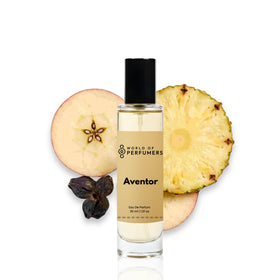
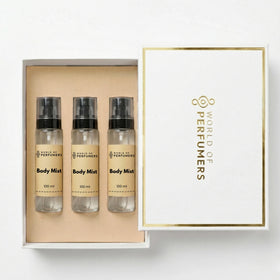
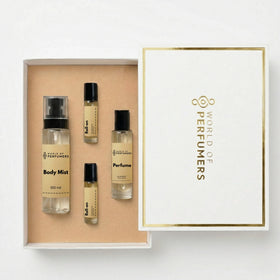
Every World of Perfumers fragrance — from our 8ml roll-on attars to our 100ml EDP sprays — is housed in glass, not plastic. This is a deliberate, non-negotiable choice. Glass is infinitely recyclable: it can be melted and reformed endlessly without any loss of quality or purity. Plastic, by contrast, degrades with each recycling cycle and most plastic packaging ends up in landfill or the ocean regardless of consumer intent.
Our packaging uses recycled kraft paper — unbleached, biodegradable, and sourced from recycled fibre. No styrofoam. No synthetic bubble wrap. No plastic shrink film. When your World of Perfumers order arrives and you unwrap it, every single element of that packaging can be composted or recycled. The bottle, once empty, can be refilled, repurposed, or dropped in your glass recycling bin. There is no guilt in the unboxing.
♻️ Glass vs Plastic — Why It Matters
Glass (What We Use)
✅ Infinitely recyclable
✅ Non-reactive — preserves fragrance integrity
✅ Biodegradable when broken
✅ Luxurious weight and feel
✅ Can be refilled and reused
✅ Non-reactive — preserves fragrance integrity
✅ Biodegradable when broken
✅ Luxurious weight and feel
✅ Can be refilled and reused
Plastic (What We Avoid)
❌ Degrades with each recycle cycle
❌ May leach chemicals into fragrance
❌ Persists in environment for 400+ years
❌ Rarely actually recycled in practice
❌ Cannot be meaningfully refilled
❌ May leach chemicals into fragrance
❌ Persists in environment for 400+ years
❌ Rarely actually recycled in practice
❌ Cannot be meaningfully refilled
🌿 Alcohol-Free Roll-On Attars — Ancient Wisdom, Modern Conscience
The attar tradition — fragrance carried in a natural oil base without alcohol — is one of India's greatest gifts to the world of perfumery. It predates synthetic chemistry by thousands of years. And it turns out, it is also one of the most environmentally responsible ways to wear fragrance.
Standard alcohol-based perfumes require large quantities of denatured ethanol — a production process with its own carbon footprint. The alcohol also causes the fragrance to evaporate rapidly from skin, meaning more applications, more product used, more waste generated. World of Perfumers roll-on attars carry fragrance in a skin-safe neutral oil base — no alcohol, no synthetic propellants, no aerosol spray mechanism. The result is a format that:
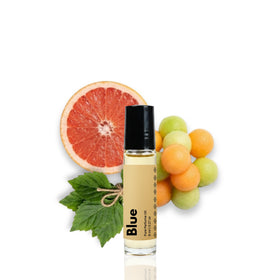
✦ Uses significantly less product per application — a precise roll delivers exactly what is needed, no overspray
✦ Lasts 8–12 hours on skin — oil anchors fragrance far longer than alcohol, reducing total usage over time
✦ Zero alcohol production footprint — no ethanol sourcing, no denaturation, no alcohol waste
✦ No aerosol propellants — roll-on format eliminates the need for pressurised spray mechanisms
✦ Compact glass bottle — 8ml in a glass roll-on generates a fraction of the packaging waste of a standard spray bottle
✦ 100% halal & skin-safe — suitable for all faiths and all skin types, including sensitive skin
🪵 Natural Oud & Attar Collection — India's Fragrant Heritage
India's attar tradition — the art of distilling natural botanical materials into fragrant oils — is among the world's oldest and most sophisticated fragrance crafts. Practised in Kannauj for over 5,000 years, the traditional deg-bhapka (copper pot distillation) method captures the full aromatic complexity of roses, jasmine, vetiver, sandalwood, and oud into a remarkably concentrated, nuanced fragrant oil.
At World of Perfumers, our Natural Oud and Attar collection honours this heritage while sourcing responsibly. Our oud is sourced from cultivated agarwood plantations — not wild trees — supporting the sustainable agarwood farming practices that are slowly replacing destructive wild harvesting across Assam and Southeast Asia. Our natural attars use ethically sourced botanical materials, with full traceability from farm to bottle.
🪵 Why Natural Oud from World of Perfumers Is Different
Cultivated Source
Farmed agarwood — not wild-harvested. Supports ecosystem recovery.
Oil-Carried
Natural oil base — no alcohol, no synthetic carrier, no compromise.
Cruelty-Free
Zero animal testing. No animal-derived materials except ethically sourced honey musks.
Made in India
Supporting Indian fragrance craft, Indian artisans, Indian heritage.
🌿 🌿 🌿
How You Can Make Greener Fragrance Choices
Every purchase is a vote — for the kind of products, the kind of packaging, and the kind of practices you want to see more of in the world. Here is how you, as a fragrance lover, can make choices that honour both your senses and the planet:
✦ Choose glass over plastic. Glass is infinitely recyclable and preserves fragrance quality better. When you have a choice, always choose glass.
✦ Buy fewer, better fragrances. A single high-quality perfume you love and use completely is more sustainable than a dozen cheap sprays that end up half-empty in a drawer. Quality over quantity is always the greener choice.
✦ Try oil-based attars. Alcohol-free, long-lasting, and requiring less product per application — roll-on attars are genuinely the most sustainable fragrance format available. Start with one.
✦ Recycle your empty bottles. Glass fragrance bottles can be washed and dropped in your glass recycling bin. Some can be beautifully repurposed as vases, oil dispensers, or decorative pieces.
✦ Support brands that are genuinely transparent. Ask questions: Where do your ingredients come from? Is your oud cultivated or wild-harvested? Is your packaging recyclable? If a brand can't answer these questions clearly, that tells you something.
✦ Choose cruelty-free. No fragrance experience is worth an animal's suffering. Always choose brands that are certified cruelty-free and do not test on animals at any stage.
✦ Celebrate Indian fragrance heritage. India's attar tradition is one of the most sustainable, most natural, and most exquisite fragrance crafts in the world. Supporting it is an act of environmental and cultural preservation.
Frequently Asked Questions — World Environment Day 2026
Q: When is World Environment Day 2026?
World Environment Day 2026 is on Friday, 5th June 2026. It is observed on June 5 every year — the date of the opening of the 1972 United Nations Conference on the Human Environment in Stockholm, which established the day permanently. It is coordinated globally by the United Nations Environment Programme (UNEP).
Q: What is the theme of World Environment Day 2026?
UNEP announces the official World Environment Day theme each year. Themes in recent years have focused on land restoration, plastic pollution, and ecosystem recovery. The 2026 theme continues UNEP's urgent call to accelerate action on climate, biodiversity, and pollution — three interconnected crises that no single government or sector can solve alone. Visit unep.org for the official 2026 theme announcement.
Q: Why is World Environment Day celebrated on June 5?
June 5 was chosen because it marks the opening day of the 1972 United Nations Conference on the Human Environment held in Stockholm, Sweden — the first major international conference on global environmental issues. The UN General Assembly established World Environment Day that same year, making June 5 the permanent date for the global celebration.
Q: How is World Environment Day celebrated in India?
In India, World Environment Day is marked by government-led tree planting drives, school and college awareness programmes, clean-up campaigns in coastal, urban, and forest areas, and corporate sustainability pledges. The Ministry of Environment, Forest and Climate Change coordinates national events. India has one of the largest World Environment Day participation rates globally — driven by deep cultural traditions of reverence for nature embedded across Hindu, Buddhist, Jain, Sikh, and tribal traditions.
Q: Is the fragrance industry environmentally harmful?
The fragrance industry, like any consumer goods sector, has a significant environmental footprint — from packaging waste and synthetic chemical production to the impact of sourcing natural ingredients like oud, sandalwood, and rose. However, conscious brands are making meaningful changes: switching to glass packaging, adopting oil-based formats, sourcing sustainably, and eliminating plastic from their supply chains. As a consumer, choosing these brands is the most direct way to push the industry toward better practices.
Q: Are World of Perfumers products cruelty-free?
Yes. World of Perfumers products are 100% cruelty-free — we do not test on animals at any stage of production, and we do not work with suppliers who do. Our products are also skin-safe and clinically tested on human volunteers. We believe no fragrance experience should ever come at the cost of an animal's welfare.
Q: What makes World of Perfumers packaging eco-friendly?
All World of Perfumers fragrances are bottled in glass — infinitely recyclable and free of the microplastic risks associated with plastic packaging. Our outer packaging uses recycled kraft paper — biodegradable, unbleached, and compostable. We use no styrofoam, no synthetic bubble wrap, and no plastic film in our shipments. When you receive a World of Perfumers order, every element of the packaging can be responsibly disposed of.
Q: What are alcohol-free roll-on attars and why are they better for the environment?
Roll-on attars are fragrance oils carried in a skin-safe neutral oil base rather than denatured alcohol. They require no aerosol spray mechanism, no alcohol production, and deliver fragrance with extreme precision — a single roll lasts 8–12 hours, meaning far less product is consumed over time compared to alcohol spray formats. The glass roll-on bottle itself is compact, fully recyclable, and reusable. Attar is India's oldest fragrance format — and as it turns out, also one of the most sustainable.
🌿 🌿 🌿